How Shelter Magazines Evolved With America
Welcome to Origin Story, a series that chronicles the lesser-known histories of designs that have shaped how we live.
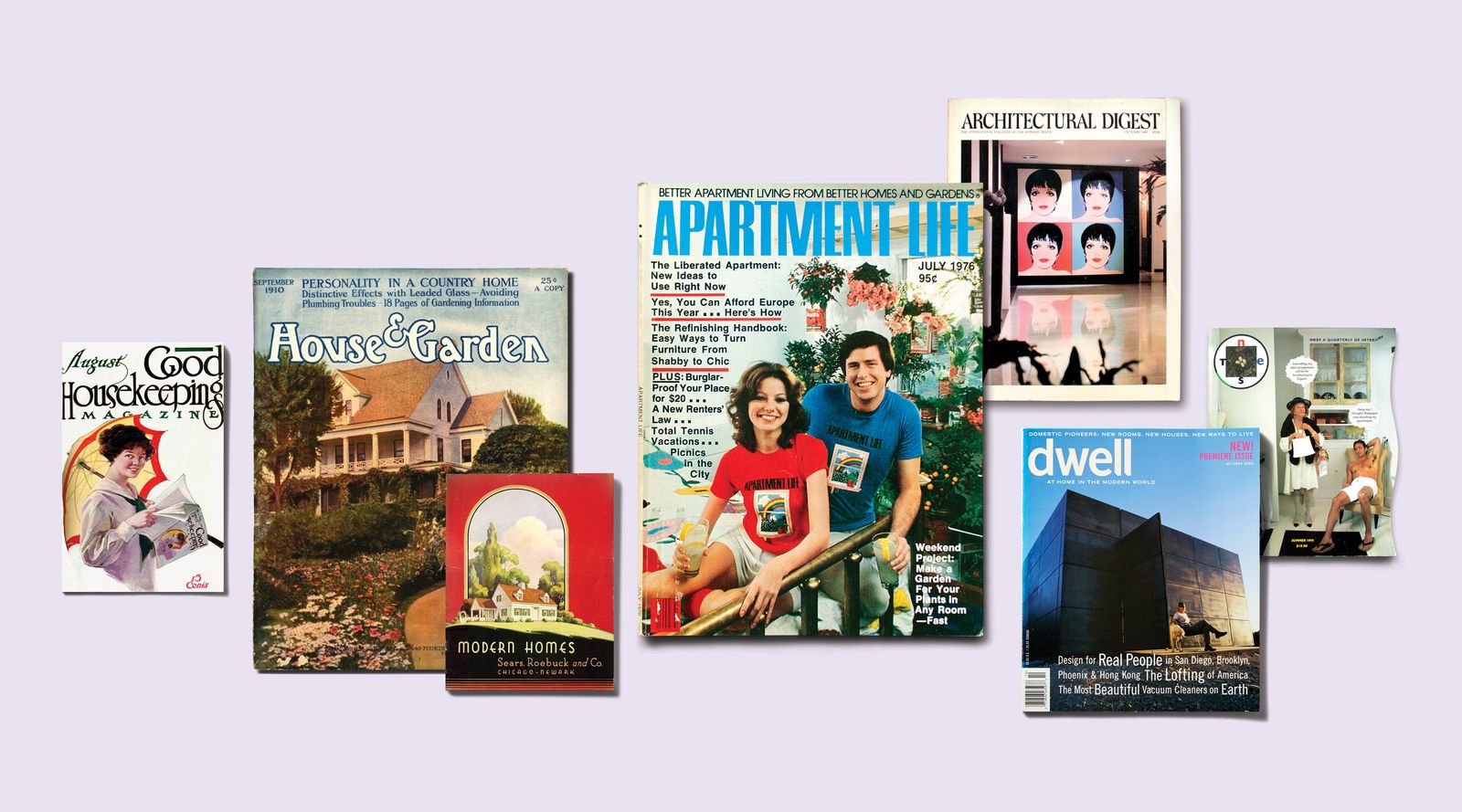
Shelter magazines—defined loosely as publications devoted to home-creating and -maintaining, from architecture and interior design to gardening—have never just been about wallpaper and paint colors. Emerging from household advice manuals of the 19th century, they’ve evolved from the Victorian era to the digital age to reflect the changing zeitgeist, both influencing and incorporating architectural journals, housing catalogs, DIY manuals, and other residential-focused media. Because this year’s September/October issue marks Dwell’s 25th anniversary, we thought it appropriate to look back at the rise of the American shelter magazine—and what its evolution reveals about the nation’s identity over its eras.
A Good Housekeeping magazine cover from the 1910s reflects a focus on marketing primarily toward women.
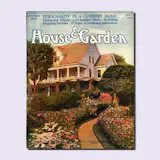
The September 1910 House & Garden cover hinted at tips for home maintenance inside.
Domestic Science
Before “shelter magazine” was an industry category—the first-known use of the term was in a 1946 New York Times article—magazines like Good Housekeeping (1885), House Beautiful (1896), and House & Garden (1901) all hit the market as architectural journals, evolving over the early 20th century to reflect the idea that the home was a workplace to be managed, with primarily women doing the managing. The publications embraced the philosophies of domestic science, a movement that treated housework as a professional discipline. Readers could find tips on how to best use and clean new appliances, investigations into the best height for kitchen countertops, and, as workforces shifted during two world wars and the Great Depression, advice on how to manage both a household and an outside-the-home job.
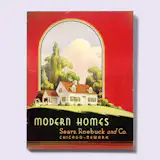
The Sears Modern Homes program offered mail-order, ready-to-assemble home kits. Pictured above is a 1936 catalog.
The Mail-Order Home
In the first decades of the 20th century, Americans could literally buy a house out of a catalog. American retailer Sears, Roebuck, and Co.’s mail-order Sears Modern Homes, along with competitors like Aladdin Homes and Montgomery Ward, offered precut kits shipped directly to a buyer’s lot. For around $1,500, a family could own a Craftsman-style bungalow complete with fixtures, flooring, and instructions. Many families found this a valuable proposition—by 1908, one-fifth of Americans subscribed, and Sears went on to sell more than 70,000 houses. The catalogs detailed advances in mass production, standardization, and the ideal of affordable homeownership, reinforcing the idea of the house as a product. By marketing ready-made housing as both convenient and patriotic—especially to returning WWI veterans and newly mobile families—they contributed to the new, American buying-centric way of life.

The Fall 1948 issue of Whole Earth Catalog included its tagline: “access to tools.”
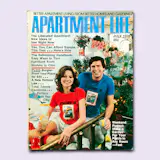
The 1970s-era Apartment Life catered to younger generations of Americans—often renters—and encouraged DIY and budget-friendly projects.
DIY Revolution!
Titles from the ’60s and ’70s, like Apartment Life and the Whole Earth Catalog, championed “doing it yourself,” counterculture’s challenge to the postwar industrial model. Instead of mass-produced furniture, they encouraged salvaging and building things with your own two hands. The Whole Earth Catalog famously billed itself with the tagline “access to tools,” offering guides to building yurts, wiring your own cabin, or growing food off-grid. As the concept of questioning authority became a thread that linked educational, political, and social movements, DIY publications made specialized knowledge more accessible to general audiences and encouraged readers to rely on their own creativity and instincts to make houses homes. Around this time, other well-established titles like Architectural Digest, founded in 1920, further cemented their focus on home-decorating ideas—many of them ones that readers tackled themselves.
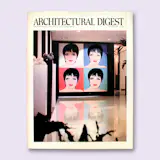
Architectural Digest’s October 1981 issue featured a mix of aspirational and service content (with more of the former).
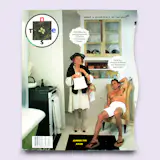
The influential interiors quarterly Nest published a total of 26 issues between 1997 and 2004.
Lifestyles on the Page (and on TV)
If the 1980s were about excess and aspiration, and the ’90s ushered in a renewed interest in affordable improvements, by the turn of the millennium, shelter was a booming category that extended beyond magazines—and the house itself. Nest, an interiors quarterly launched in 1997, drew upon contributors from the worlds of literature, art, and theater. Magazines like our own, founded in 2000, Domino (2005), and lifestyle and home decor blogs like Apartment Therapy (2004) offered something more than design ideas: They pitched a curated lifestyle, one in which you could learn about new furniture designers, heritage wallpapers, and boutique hotels all in one glossy spread—or slideshow. In the aughts, shelter magazines became full-scale media brands that hosted events, launched product lines, and laid the foundation for what would become home improvement television. When HGTV, which was founded in 1994 but exploded in popularity in the 2000s, brought shelter content to a mass audience, it further solidified home improvement content as aspirational entertainment, the kind that now also dominates our social media feeds in the form of home updates, hacks, and shoppable product links from influencers.
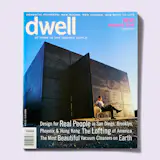
The cover of Dwell’s premiere issue, published in October 2000, featured the words: “design for real people.”
link