6 Benefits Of Passive House Design For Your Well-Being And Wallet

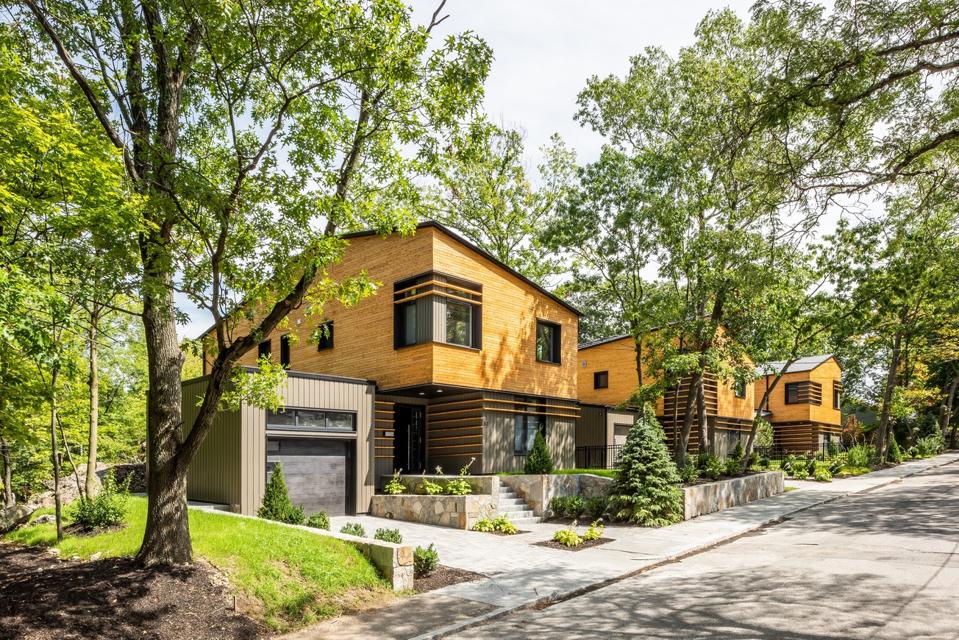
Passive house design makes these residences more energy efficient, resilient, comfortable and healthy to live in.
RODE Architects
We’re an active, dynamic, movement-focused and energized nation. It’s in our DNA, right? So why is the concept of passive house design one that we should strongly consider for our new home construction and even remodeling projects? What’s in it for homeowners? Proponents of the PH design movement share benefits that can enhance our health, safety and wellbeing. Let’s take a look at these ideas (and a few pesky drawbacks).
Passive House Design Defined
This may be a ‘new-to-you concept,’ but it has been around since the 1970s oil crisis, and is incorporated in architecture projects around the world. “Passive House is a building standard that is truly energy efficient, comfortable and affordable at the same time,” one of its leaders, Dr. Wolfgang Feist, commented in an undated Passive House Institute post. PH design is not a brand name, he specified, “but a tried and true construction concept that can be applied by anyone, anywhere.” So why is it so little known in the United States outside of professional circles?
Bronwyn Barry is one of the founders of the Passive House Network, a nonprofit educational organization focused on this architectural discipline. She is also a San Franciso-based architect and firm principal specializing in this field and working to raise its profile. Barry and her fellow PH advocates want us to consider its many positive features for our own benefit.
Expanding Influence
It’s likely that if your home has been built after 2000 — especially in highly-regulated California — that it has adopted some passive house design concepts, particularly guarding against energy seepage. (Creating “tight” houses has had some extremely negative effects on indoor air quality when not done with a focus on occupant health as well as energy efficiency; this is a phenomenon that PH proponents have addressed in their certification criteria.) Barry explains, “Controlled and continuous ventilation reduces the impact of off-gassing generated by furniture, toxic materials, perfumes, candles and cooking etc.”
Massachusetts has embraced PH design in its multifamily sector: “As of 2020, the state had only one multifamily passive house. Today, 119 buildings that have received financial and technical support under the Mass Save passive house incentive program are scheduled to achieve official passive house certification by 2026,” a February 5, 2024 Yale Climate Connections article declared.
Kevin Deabler, co-founder and principal of Boston-based RODE Architects, is forging expansion in the state’s single family sector with its first certified home in the West Roxbury neighborhood, and with a fully-certified neighborhood in Stoughton.
1. Reduced Energy Bills
Energy efficiency, the initial impetus for PH design during the 1970s Arab oil embargo, still matters. “Imagine a home so efficient that it could be heated with a hair dryer!” declared the Yale article, continuing “That’s the promise of a passive house, a design standard that’s becoming increasingly popular in the architecture community for its benefits to occupants and the climate.” One of the writer’s sources calls passive house design “the most reliable, cost-effective, and healthiest way to reach superb energy performance in architecture.”
“Due to the robust envelope of the home, heating and cooling systems are actually downsized relative to conventionally built houses; it requires smaller equipment to maintain the internal temperatures,” Deabler explains, adding, “When paired with solar panels or mini-split heat pumps, energy management becomes even simpler, and we’ve seen some residents even generate a credit on electricity bills.”
2. Better Indoor Air Quality
Barry notes that PH design’s ventilation systems are “designed to provide a continuous flow of fresh, filtered air to all living spaces, plus an extract from all wet-room areas. This feature has been shown to improve occupant health outcomes, especially those with allergies or asthma-related illnesses. We also saw in the pandemic that most buildings are not adequately ventilated, or rely on re-circulation of existing indoor air.” (The pandemic was definitely a watershed for Americans fully grasping the links between their homes, health and safety.)
3. Year-Round Comfort
“These homes maintain consistent indoor temperatures year-round, eliminating drafts and cold spots, while large windows can maximize natural daylight. This thoughtful design not only promotes comfort but also supports mood, mental health, and overall wellbeing, even in extreme seasonal conditions,” Deabler shares.
Barry observes that our body temperatures can self-regulate (and relax) more easily inside a passive house. “In non-PH buildings we often find that our feet are colder or cold window surfaces cause us to radiate our body heat outwards, usually only on the side of our body closest to the window.” Whole body comfort is a definite well-being benefit.
4. Increased Resilience
“Passive homes are built to rigorous performance standards that make them inherently more resilient to environmental stressors and extreme weather,” Deabler notes. Barry adds that since they’re required to strictly limit envelope leakage, they control against wind-driven moisture infiltration, smoke and particulate infiltration (crucial in wildfire zones) and general humidity, moisture inflow, which helps in hurricane zones. These have beneficial durability properties, she points out, as well as health benefits.
5. Reduced Maintenance
“These homes limit wear on mechanical systems and reduce routine maintenance. Residents enjoy consistent comfort without frequent interventions, which is particularly valuable for older adults or those with mobility challenges. Due to the robust envelope of the home, heating and cooling systems are actually downsized relative to conventionally built houses; it requires smaller equipment to maintain the internal temperatures,” Deabler explains.
“Uncertified projects cannot claim this benefit,” Barry cautions, adding, “filters in the energy/heat recovery ventilation system should be changed regularly, which would be the primary maintenance item in all PH’s. Designing these to be readily accessible to occupants makes this more manageable for all.” (No one wants Grandpa climbing ladders to change ceiling-installed filters!)
6. Improved Health And Safety
“Advanced envelope systems also reduce the risk of moisture intrusion and mold growth, creating a safer and more stable indoor environment,” Deabler notes. He points to the specific benefits for older adults, saying, “For those who are aging and living with mobility impairments, their lungs are more at risk of infections from environmental contagions. A large percentage of this population lives in sub-optimal conditions, which exacerbate the decline in health and wellbeing.”
Drawbacks
While PH design can cut your utility bills and add to your well-being, it’s not without its drawbacks. ScienceDirect summarized them in a November 2023 article: “Costs were, are, and always will be a crucial part of decision making related to Passive House and deep energy retrofits. For a typical Passive House retrofit, the homeowner must finance it themselves, and it can be expensive.”
The article also notes that building codes and regulations can be challenging. Inspectors may look askance at deviations from the systems they’re accustomed to seeing. One of the other challenges it identifies is having your PH project, whether new construction or retrofit, done properly. As in every other aspect of home building and improvement, choosing a knowledgeable, ethical and experienced team is crucial.
Last Words
Barry observes that “passive design” can also refer to passive building design or passive solar and the terms are not interchangeable. “These can all differ significantly and don’t include any or all of the features and benefits I’ve outlined above,” she clarifies. Certified Passive House design is her yardstick for a home offering the full range of PH benefits. Deabler has pursued certification for his projects, confirming this approach, but if you’re not building a new home, incorporating PH design features into a remodel, equipment replacement or addition are worth considering.
“Passive homes really push the boundaries of what is possible to improve health and wellbeing,” Deabler shares. “They provide a quiet, serene environment thanks to thick walls and airtight construction that minimize outside noise. Large windows bring in natural light, boosting mood and mental health, while consistent temperatures and clean air support overall comfort and reduce stress. Residents also gain financial and emotional peace of mind, enjoying lower utility costs and confidence in living in a safe, energy-efficient, and comfortable home.”
***
NOTE: Deabler and Barry were interviewed by email and direct message (respectively) earlier this month.
link