


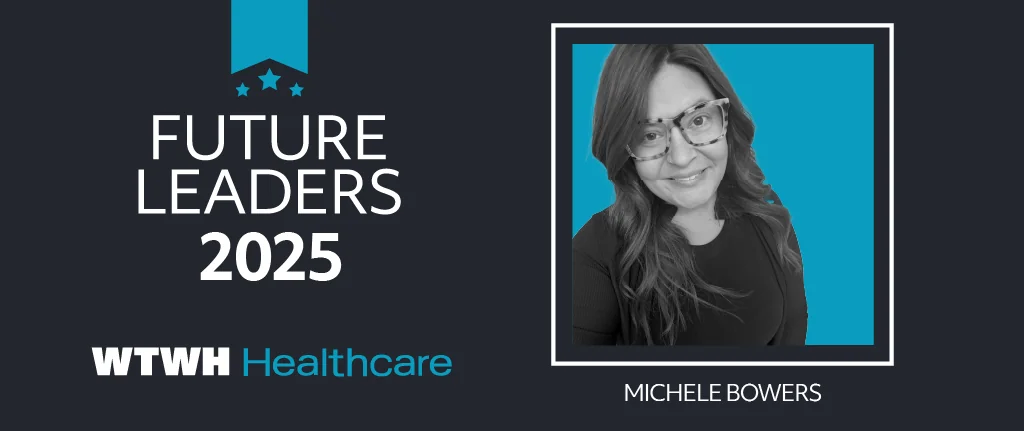
Michele Bowers, Clinical Director at Sophros Recovery, has been named a 2025 Future Leader by Behavioral Health Business.
To become a Future Leader, an individual is nominated by their peers. The candidate must be a high-performing employee who is 40 years of age or younger, a passionate worker who knows how to put vision into action, and an advocate for patients and older adults, and the committed professionals who ensure their well-being.
Bowers sat down with Behavioral Health Business to share what drew her to the home health & home care industry, the biggest leadership lessons she has learned, her thoughts on the future of home health & home care, and much more. To learn more about the Future Leaders Awards program, visit
BHB: What drew you to the behavioral health industry?
Bowers: To an extent, I ended up in the industry by accident – through a combination of life events and decisions rooted in my passions. I was considering enrolling in either an MBA program or a Clinical Mental Health program and found myself stuck between the two. I enjoyed working in administrative roles, and saw a future there, but the work felt unfulfilling.
Ultimately, I chose the Mental Health program and discovered that my background in business gave me a unique vantage point that has positively impacted my roles, both clinically and in leadership.
BHB: What’s your biggest leadership lesson learned since starting to serve this industry?
Bowers: Leadership isn’t about having all the answers – it’s about setting the pace. That pace includes creating a space where people feel valued, empowered, and motivated to grow. In this industry, the work is deeply human and often challenging. Leading with empathy and authenticity helps build a workplace where people feel safe, supported, and encouraged to show up as their best selves.
I’ve learned that genuine leadership, rooted in compassion and purpose, is what truly makes an impact. At the end of the day, success comes from building a team that is passionate and fearless in their work. It’s essential to create an environment where the team feels supported, enabling them to provide exceptional clinical care that leads the industry.
BHB: If you could change one thing with an eye toward the future of the behavioral health industry, what would it be?
Bowers: I would hope to see continued expansion of access and the removal of barriers to care. Too often, the people who need support the most struggle to get it due to obstacles like cost, stigma, or complex systems that are difficult to navigate.
I’d love to see a future where behavioral health is treated as essential to overall well-being, where services are proactive instead of reactive, and where support is equitable, inclusive, and approachable. When care is accessible and effective, the positive impact ripples through an individual’s life, influencing not just them, but also their families, communities, and society, as a whole.
BHB: In one word, how would you describe the future of behavioral health?
Bowers: Synergistic.
BHB: If you had a crystal ball, what do you think will impact the behavioral health industry now and into 2026?
Bowers: I believe we will continue to see a growing emphasis on whole-person care that integrates all the elements of wellness contributing to mental well-being. There will be an increased interest in and research surrounding holistic methods of treatment, as well as non-traditional approaches.
As societal stigma continues to shift, the demand for behavioral health services will keep rising, especially as individuals feel the ongoing impacts of post-COVID collective trauma, economic strain, and evolving substance use trends.
BHB: In your opinion, what qualities must all Future Leaders possess?
Bowers: Future Leaders in behavioral health need a combination of qualities that allow them to navigate challenges while inspiring and supporting their teams. Resiliency is essential, as this field is constantly evolving. Leaders must remain focused and uphold standards of care, even while facing obstacles.
Creativity is also critical for finding innovative solutions to complex challenges, reimagining processes, and adapting to unique situations. Courage is needed to ask hard questions and challenge the status quo. Finally, leaders must be empowering – creating spaces where people feel valued, supported, and motivated to grow. Together, these qualities help guide teams with clarity, purpose, and impact.
BHB: If you could give advice to yourself looking back to your first day in the behavioral health industry, what would it be and why?
Bowers: I would tell myself to never settle for anything less than excellence; whether that is in my own clinical delivery, my leadership, or the company I am working for. Never settling for anything less than my standard of care has been pivotal, and that hasn’t always made the journey easier, but it did lead me to my role at Sophros Recovery – being able to provide care. That is a quality I believe in. This allows me to lead with purpose and passion.
“Just keep going” was some of the best advice I received when I first started in the field, and it’s advice I’ve often come back to throughout my time working for agencies that didn’t align with my quality care values. This pushed me to never stop challenging and evolving myself until I found a company that I aligned with.
link