


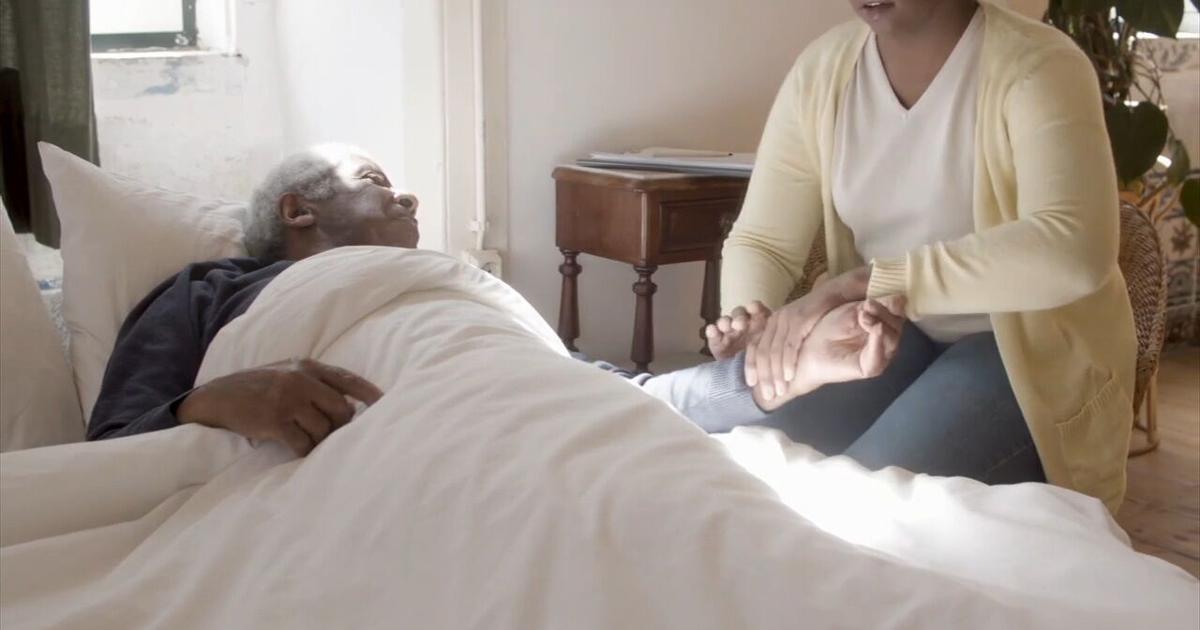
The Pennsylvania Home Care Association says it feels let down by Gov. Josh Shapiro’s budget proposal.
The home care industry says that as the need grows, it’s losing more and more workers. About 400,000 residents rely on home care.
Many in the industry were hoping the governor’s $53.2 billion budget would include a pay boost. It didn’t, and some say the ramifications mean more people could be left without care.
Working 79 hours a week, 43-year-old Lynn Weidner is a client-paid, in-home caregiver for 38-year-old Brandon Kingsmore, who lives with cerebral palsy. He’s also her partner.
“Uses a power wheelchair, has a full lift. So I do all his activities of daily living, bathing, dressing, cooking, everything,” Weidner said.
Weidner makes about $14 an hour, without healthcare, paid through Medicaid. She’s part of a shrinking but vital industry looking for a boost.
“You can’t pay people poverty wages, where they could make more going to fast food. This is a difficult job,” she said.
“We are deeply, deeply disappointed in this budget; it doesn’t address the reality we know families are facing all across Pennsylvania,” said Mia Haney.
Haney, CEO of the Pennsylvania Home Care Association, a trade group representing home care agencies, says those wages—currently $20.63 on average—are 25% to 75% lower than surrounding states. She had hoped for a 13% proposed increase. Haney says the Shapiro administration offered none.
“Today, 29% of hours for nursing care go unfilled for children, and 122,000 missing shifts occur every month. For seniors, it will only get worse,” she said.
As demand grows, the gap between need and available care only widens. For Kingsmore, Weidner isn’t going anywhere; for those not as lucky, the future is uncertain.
“It would be whatever Medicaid would pay for, as far as a facility, a county home, whatever they provide,” Weidner explained.
“He wouldn’t be in his own house, right?” 69 News reporter Bo Koltnow asked.
“He wouldn’t be in the community at all,” she said.
In last year’s budget, which was signed in November, there was an added $21 million to boost salaries for those like Weidner, who are hired directly by the client.
Those funds are expected to get salaries over $15 an hour; it represents 6% of the workforce.
We did reach out to the governor’s office about a proposed increase for the other 94% that Haney represents and are still waiting to hear back.
link