


In North Carolina, thousands of elderly residents rely on
Medicaid to pay for long-term care in nursing homes.
It’s the only option for many families to afford
around-the-clock care as their loved ones age.
For Sarah Cope and her siblings, coordinating care for their
89-year-old mother, Linda Davis, has been a shared responsibility.
“She lived very independently until we started seeing signs
of some dementia,” Cope said. “We did everything in our power to be able to
keep her at home. We took turns having her in our homes. I would have her three
days a week, my sister would have her three days a week, and my brother would
have her one day.”
Cope said her family maintained the rotating care schedule
for two years until her mother’s dementia progressed to the point where she needed 24/7
care.
Cope described making the choice to move her mother into a nursing
home in Harnett County as “the hardest decision we’ve ever done.”
Three years later, the Garner resident believes it was the
best choice they could have made for her mother.
It’s also a choice they can’t afford without Medicaid.
“There’s no way my mom could afford nursing care without
Medicaid. You’re talking $13,000 a month for a skilled nursing facility like
she’s in,” said Cope.
Davis is one of more than 3 million North Carolinians
enrolled in Medicaid.
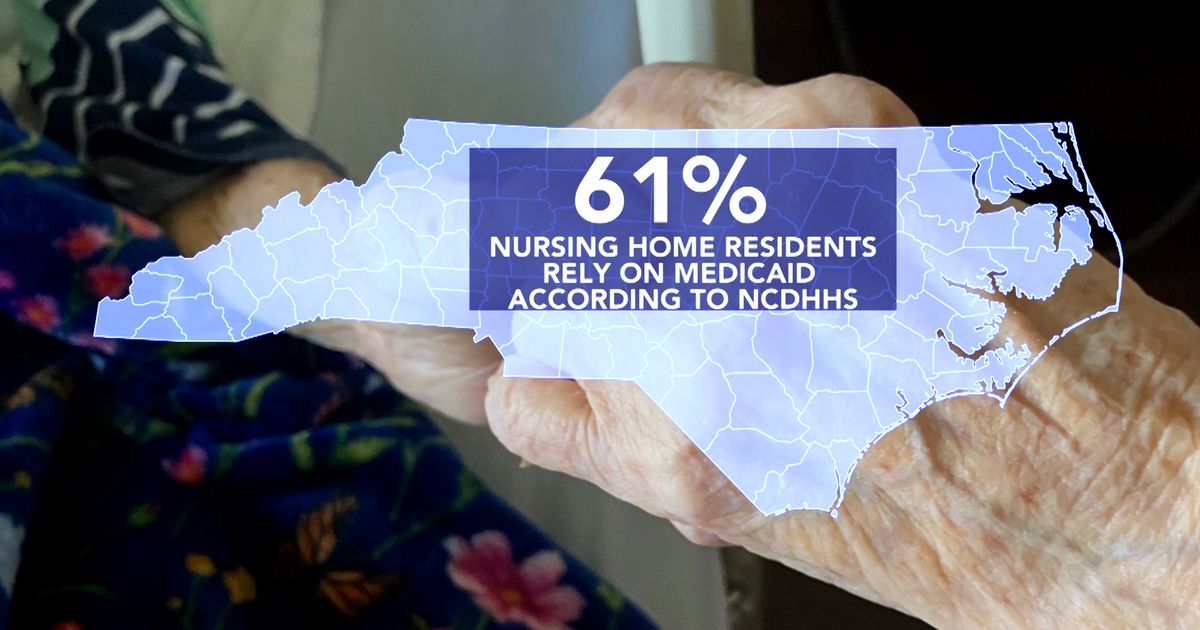
There are more than 1,200 adult care facilities statewide. Sixty-one percent of nursing home residents in North Carolina are covered by Medicaid, according
to NCDHHS.
Federal cuts to Medicaid could put coverage for residents
like Davis in jeopardy.
Lawmakers have proposed slashing more than $700 billion in
Medicaid funding over the next 10 years. The budget passed the U.S. House last
week and is now being considered by the U.S. Senate.
Republicans who back the measure insist major cuts are
needed to reduce the nation’s debt, currently
amounting to more than $36 trillion.
The Congressional Budget Office, an independent, nonpartisan
U.S. government agency, estimates 8.6 million Americans could lose coverage
under the proposed Medicaid cuts.
Cope said it’s a reality that is now weighing heavily on her
mind.
“It’s stressful because we don’t have a Plan B. There is no
Plan B for my mom,” said Cope. “It is very worrisome.”
Cope said she understands tough decisions have to be made to
reduce debt, but argues it shouldn’t come at the cost of necessary care for
hardworking people like her mother.
“It is heartbreaking to think of people, including my mom
who might not have the quality of care that they have now because of Medicaid
cuts,” said Cope. “She worked her entire life in a factory working
however-many hours a week. She did it for her family, and she continued to
provide for us and me, even when my father passed away. She deserves quality
healthcare.”
Cope said she emphasizes with others who may not
have the same level of family support Davis has.
“There are so many other people in that same boat,” noted
Cope. “It breaks my heart to think these people I have grown to know and love
at this nursing home – and there are so many others across North Carolina and
the country – that their care would be compromised if these cuts were put into
place.”
Cope has also found a way to amplify her concerns beyond her
own family, working with the American Cancer Society Cancer Action
Network, a nonpartisan advocacy affiliate
of the American Cancer Society, to speak out against the proposed Medicaid
cuts.
The Wake County resident encourages lawmakers to remember the
faces behind the dollar signs as they consider whether to cut Medicaid funding.
“It’s not just numbers on a paper that is being flipped
through in a however-many page bill being put in front of people. It would
have a very detrimental impact on my mom,” said Cope.
Cope told WRAL she has attempted to appeal directly to her
representatives by contacting several lawmakers’ offices but hasn’t received
any responses.
WRAL also reached out to lawmakers for comment.
Senator Thom Tillis responded with the following statement:
“We must protect and strengthen
Medicaid for our most vulnerable neighbors, including seniors on fixed incomes,
low-income families, pregnant women, and individuals with disabilities.
Enacting work requirements for able-bodied adults and eliminating waste, fraud,
and abuse is not cutting Medicaid; it’s preserving the program for those who
truly need it. Democrats in Congress have had every opportunity to fix our
broken system, but instead, they chose to give Medicaid benefits to illegal
immigrants at the expense of single moms, children with disabilities, and
veterans who desperately need care.” Sen. Thom Tillis
Cope said she fears the true extent of cuts aren’t fully
understood.
“There’s so many millions of people in the state
of North Carolina that could be negatively impacted by these cuts. It’s not
just the elderly,” said Cope. “Imagine if it was someone you loved that didn’t have access to quality healthcare without Medicaid.”
link