


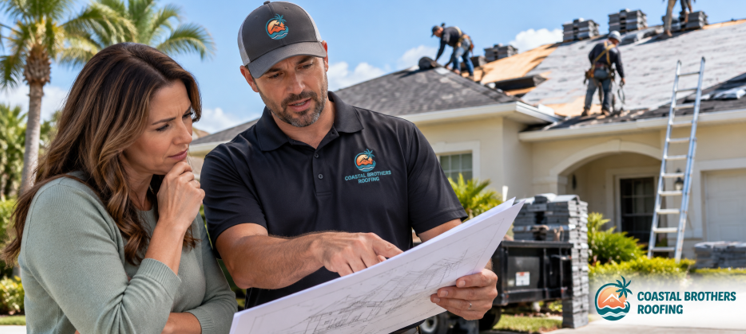
Roof replacement is a major home improvement project, but choosing new shingles is only one part of the planning process. Homeowners who focus solely on material and price can overlook structural, ventilation, drainage, and permitting issues that may affect the roof’s performance and the project’s overall cost.
The Condition Beneath the Roofing
New roofing materials cannot compensate for damaged decking or deteriorated structural components. During replacement, the existing roof deck should be evaluated for moisture damage, rot, or other defects. If problems are discovered, repairs may be necessary before the new roof can be installed properly.
It is also worth considering whether previous roofing work has created multiple layers or concealed older problems. Local building requirements can affect whether existing roofing materials may remain in place.
Ventilation and Attic Conditions
Roof replacement is an opportunity to evaluate attic ventilation, but it is frequently overlooked. Poor ventilation can contribute to excessive heat and moisture accumulation in the attic, potentially affecting insulation, wood components, and the roof system.
The U.S. Department of Energy notes that proper attic ventilation can help control moisture and temperature, although ventilation strategies should be appropriate for the home’s design and climate.
Flashing and Water Management
The roof covering gets most of the attention, but flashing plays a critical role in directing water away from vulnerable areas. Roof-to-wall intersections, chimneys, skylights, valleys, and penetrations all require appropriate detailing.
Homeowners should also consider gutters and downspouts. If drainage components are damaged, improperly positioned, or undersized for the home’s needs, replacing the roof alone may not resolve water-management problems.
Permits, Codes, and Local Requirements
Roofing requirements are not identical throughout the United States. Local jurisdictions may have specific permitting, inspection, material, wind, snow, or fire-resistance requirements. Some communities may also impose additional requirements based on local conditions or designated areas.
Checking requirements before work begins can help prevent delays and unexpected compliance costs.
Budgeting for More Than the Roof Covering
A realistic budget should account for potential decking repairs, flashing replacement, ventilation improvements, disposal of old materials, permits, and other necessary work. Homeowners should also clarify what is included in the contractor’s proposal and how unforeseen conditions will be handled.
Planning Beyond Appearance
A successful roof replacement is about more than selecting a color or roofing material. Evaluating the underlying structure, ventilation, flashing, drainage, and local requirements helps ensure the entire roof system is addressed.
Taking time to identify these commonly overlooked issues before construction can make the project more predictable and help protect the home long after the new roof is installed.
This post was written by a professional at Coastal Brothers Roofing. Coastal Brothers Roofing is a family-owned Tampa roof installation company offering expert re-roofing and repair services. Whether you need a Clearwater, roofing company, or maintenance, we install premium shingles, tile, metal, and low-slope systems, including products from Tamko and Owens Corning. Our team also provides gutter, soffit, fascia, and emergency tarping. Trusted as one of the best residential roofing companies near you, we deliver durable, high-quality roofing systems built for Florida’s climate.