


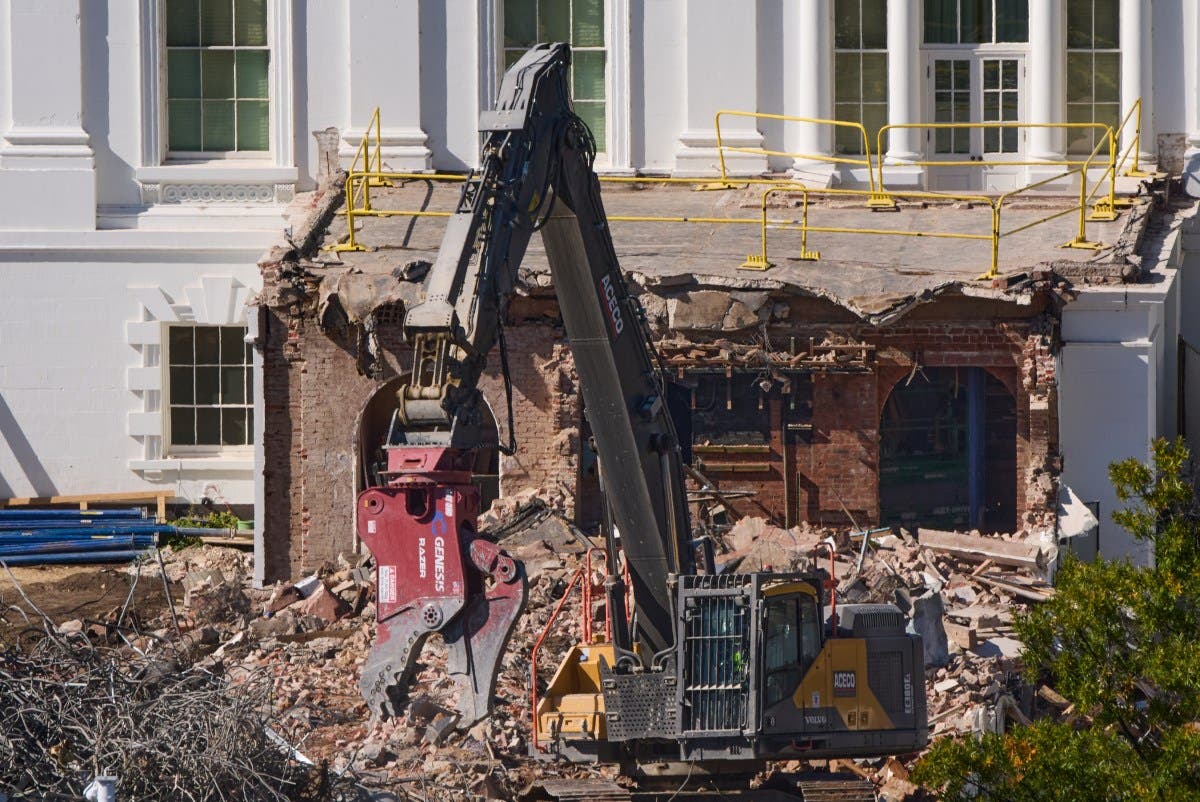
Demolition crews have begun tearing down the East Wing of the White House, clearing ground for a 90,000-square foot ballroom in the biggest White House expansion in more than 70 years.
President Donald Trump said the $300 million project will not cost taxpayers anything as it will be paid for by private donors – a list of which was released by the White House on Thursday.
While every president has left a mark on America’s most famous residence – ranging from pressing structural repairs to personal luxuries – few have matched the scale of Trump’s project.
Newsweek has broken down how this effort measures up to the overhauls of Harry Truman, Theodore Roosevelt, Franklin D. Roosevelt and others.

Theodore Roosevelt‘s Move to Modernize
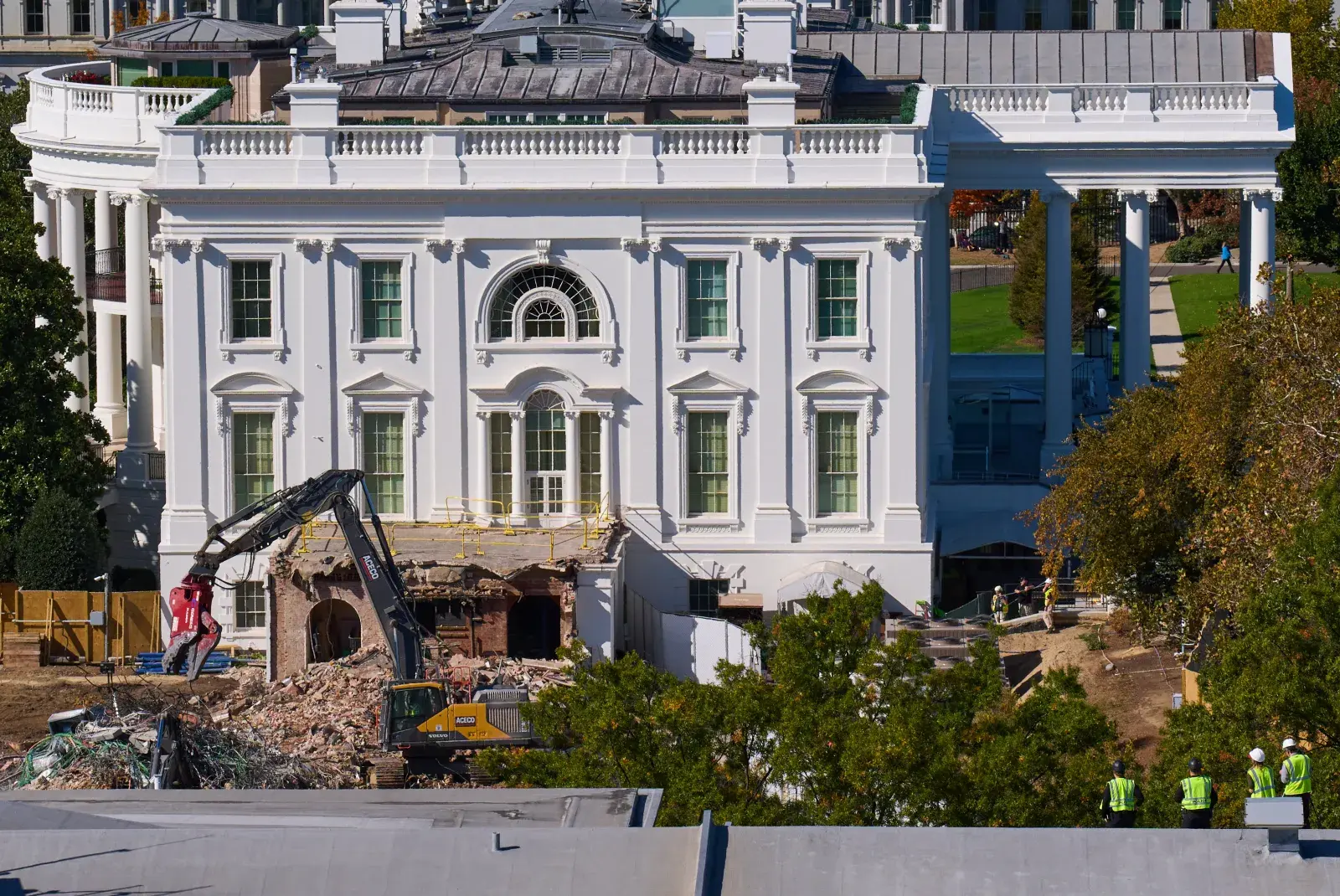
President Theodore Roosevelt initiated the first major modernization in 1902, transforming the White House into a working symbol of the presidency.
Roosevelt moved executive offices and staff into the newly built West Wing, separating private quarters from public business, according to Architectural Digest’s timeline of White House renovations over the years.
His renovation, led by architect Charles McKim, cost over half a million dollars at the time – roughly $18–$22 million today.
While praised for creating a functional home and workplace, Roosevelt’s overhaul drew flak for discarding the original Victorian interiors in favor of a starker neoclassical style.

Franklin D. Roosevelt Adds the East Wing
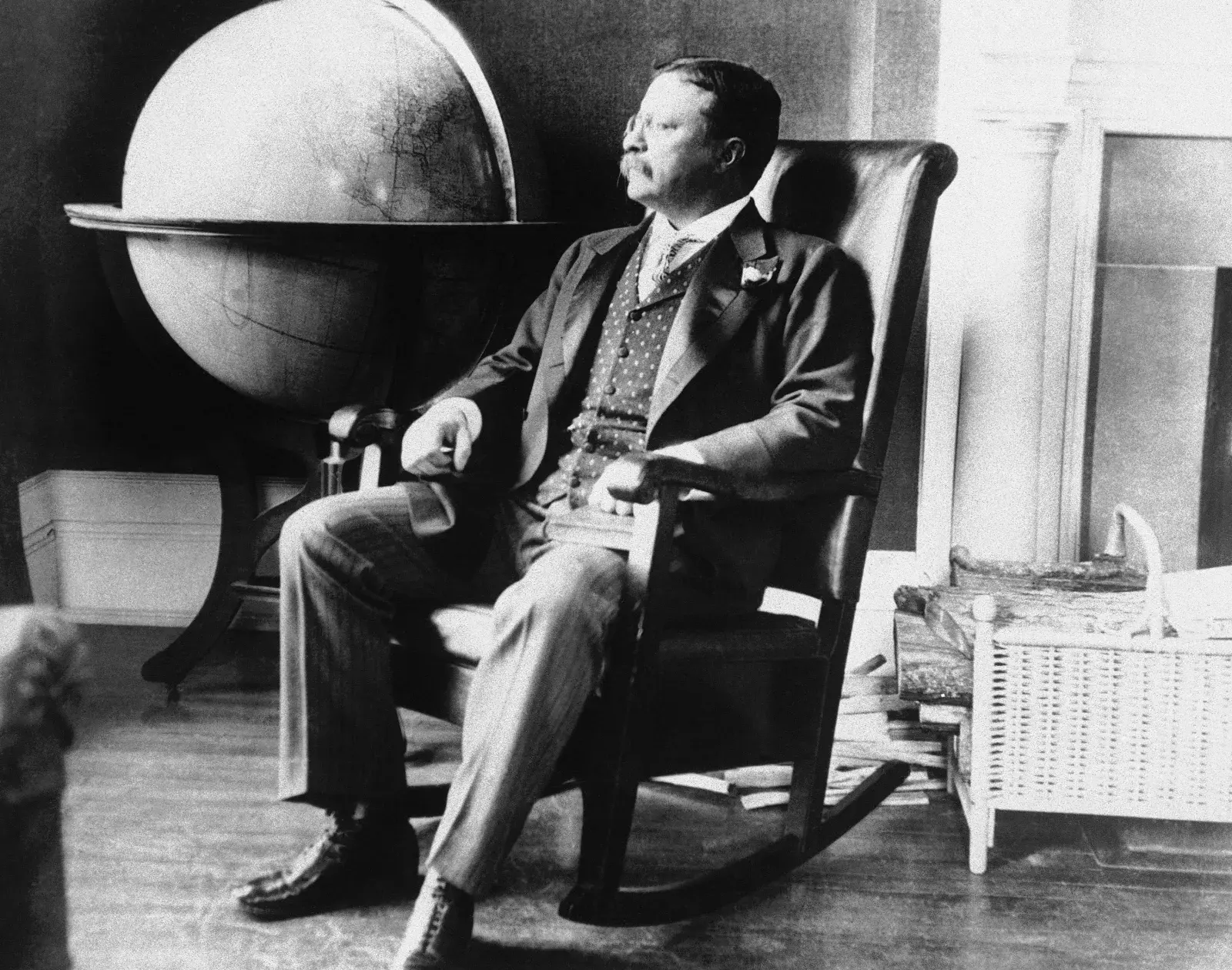
Amid World War II, Franklin D. Roosevelt added the East Wing in 1942 to provide office space, a cloakroom, and an underground bomb shelter. This pragmatic project expanded the White House’s capacity during a period of global crisis and was funded through wartime appropriations. At the time, the addition faced little controversy because of its functional necessity and modest scale.
Harry Truman‘s White House Reconstruction
The most sweeping intervention before Trump’s was the Truman Reconstruction of 1948–1952, a project so ambitious that only the White House’s iconic exterior walls were left standing.
By 1948, decades of patchwork repairs, design flaws and war damage left the mansion structurally unsound, according to the White House Historical Association.
Did Harry Truman gut the White House?
After engineers discovered cracked beams, collapsing floors, and following an infamous episode when Margaret Truman’s piano leg crashing through a rotted floorboard, the White House was deemed unsafe for occupancy. Truman and his family moved to Blair House across the street for over three years while contractors gutted the interior and rebuilt the structure with concrete and steel.
The renovation ultimately cost about $5.7 million (around $53 million now), approved by Congress. The reconstruction was overseen by a special body known as the Commission on the Renovation of the Executive Mansion, established in 1949. The project was completed in 1952, modernizing the building but drawing criticism for erasing much of its historic interior character even as it preserved the White House for future generations.

The Trump Ballroom
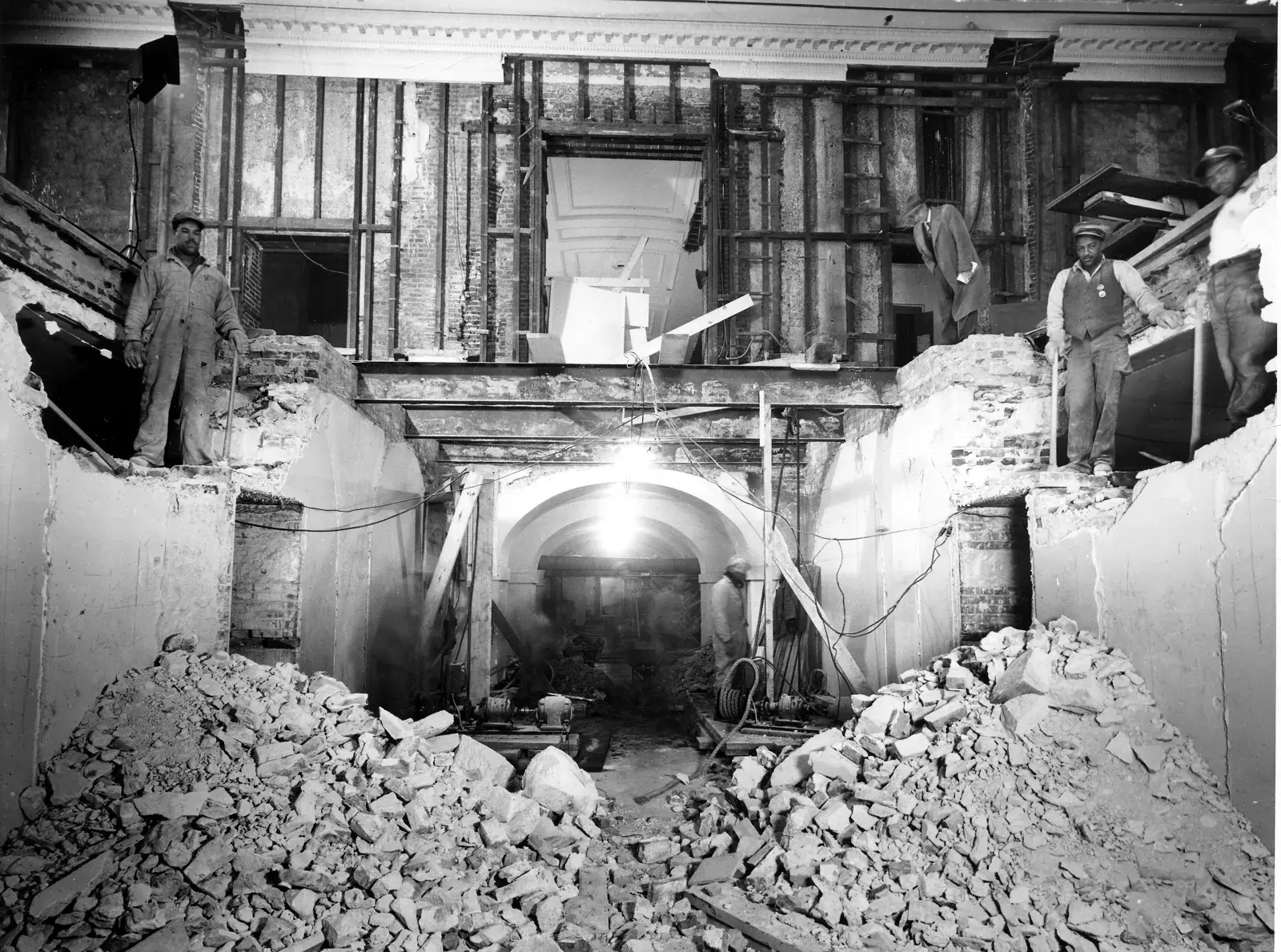
Trump’s planned ballroom dwarfs most previous changes with its size and price tag. The 90,000-square-foot project—nearly doubling the area of the current White House wings—will replace the historic East Wing and accommodate up to 650 seated guests, holding 999 people in total. The administration says this will eliminate the need for external tents during state events, something the president has complained about in the past.
Trump and his donors are said to be privately funding the $300 million project, bypassing congressional appropriations that paid for earlier overhauls.
Newsweek has compiled photos that show photos of the East Wing demolition here.

Other White House Renovations and Upgrades Through the Years
Presidential renovations after Truman often focused on modern amenities, communications or personal touches.
President Richard Nixon installed a bowling alley and implemented soundproofing upgrades in the 1970s, funded through maintenance budgets.
President Bill Clinton’s administration spent about $4 million – some from private donors – to refurnish interiors and expand IT systems for the digital age.
How much did Barack Obama spend on White House renovations?
While the Obama administration oversaw several renovations and aesthetic updates, no major structural changes were made to the White House itself. The most substantial figure linked to his tenure—$376 million—was part of a congressionally approved modernization project, according to The Washington Post, rather than a personal initiative. The Obamas themselves reportedly spent about $1.5 million on redecorating and interior updates, including furniture, paint, and artwork.
Did Barack Obama add a basketball court?
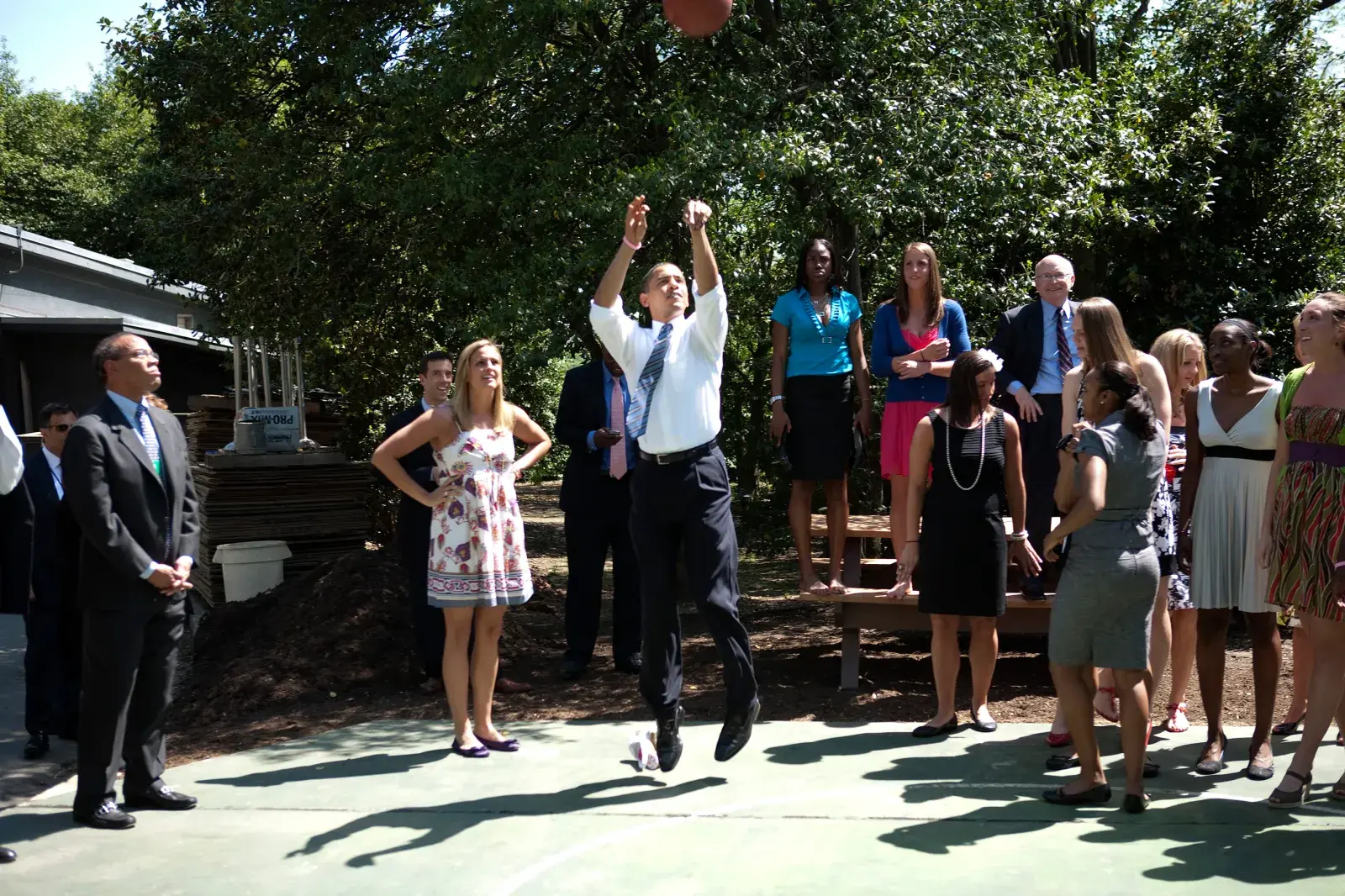
Obama, a basketball enthusiast, converted the White House tennis court into a court that could accommodate both tennis and basketball in 2009; official cost figures for this adaptation were not released.
Who Approves White House Renovations?
White House renovations must be approved by several entities depending on the scope and funding of the project. For major structural changes or construction, the National Capital Planning Commission (NCPC) is the primary federal agency responsible for reviewing and approving plans for government buildings in Washington, D.C.
Additionally, Congress plays a role when public funds are involved, typically through appropriations for maintenance and infrastructure upgrades. Advisory bodies like the Committee for the Preservation of the White House may also provide input, especially for historically significant areas, though their recommendations are often non-binding.
In the case of Trump’s privately funded ballroom, these agencies were not fully engaged before demolition began. The NCPC confirmed that no construction plans had been submitted at the time, and its approval is only required for vertical construction—not demolition. Critics, including Senate Democrats and preservation groups, argue that the administration bypassed the legally required public review process, raising concerns about transparency, ethics, and historical preservation.
The White House has dismissed the backlash surrounding the demolition of the East Wing and construction of the Trump ballroom as “manufactured outrage” from critics and the media. In multiple statements and press briefings, officials have portrayed the project as a historic enhancement of the executive residence, consistent with renovations made by past presidents.
link