‘It has made my life a lot easier’: New Ohio program pays people to care for their loved ones at home
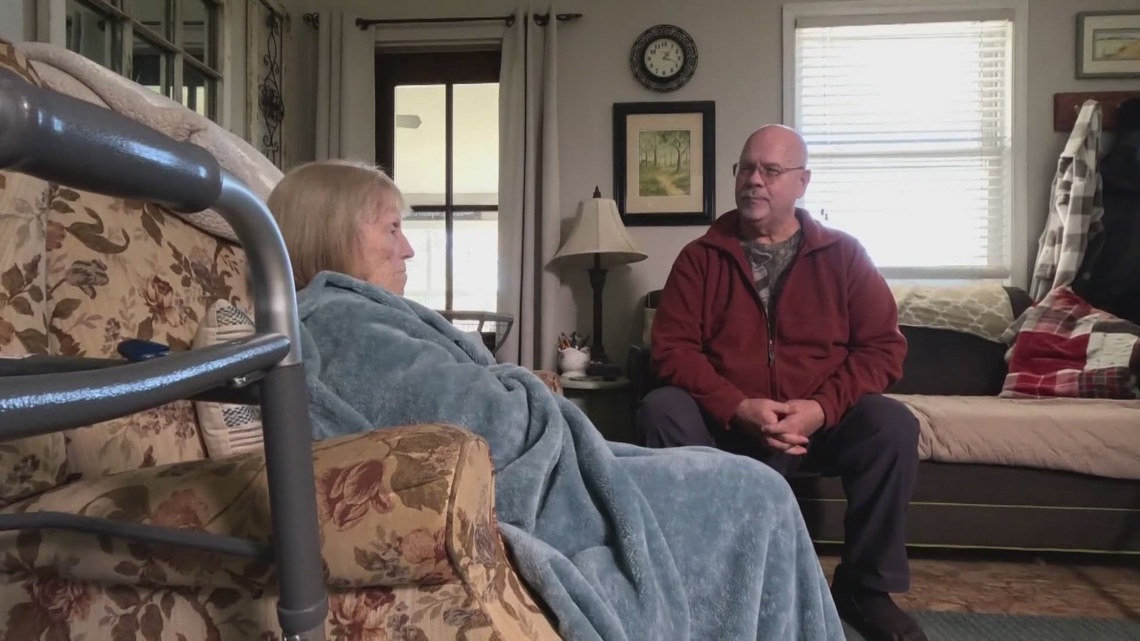
In Ohio, the average cost of in-home care can be more than $60,000 a year. A new program allows caregivers to receive a monthly paycheck to pay for expenses.
COLUMBUS, Ohio — Mark Straub, of Delaware County, started caring for his 93-year-old mother about two years ago.
As much as he loves to have his mother at home instead of a nursing home, caring for a loved one 24/7 brings with it stress, both emotional and financial.
“When she doesn’t sleep, I don’t sleep,” Straub said.
Michael Tsavaris, of Knox County, also cares for his mother at home.
“I’ve been caring for my Mom since I moved back home from Texas in 2013,” he said.
Both men lead different lives when it comes to caring for their mothers.
Mark said Medicare pays for hospice nurses to visit with his mother weekly. For the rest, he pays out of pocket.
“My limitations of my ability to work [have] pretty much decreased. I’m a nurse, I work as needed, but if I’m lucky, I can work one day a week,” he said
The average cost of in-home care in Ohio is $60,238, according to CareScout. The average cost of nursing home care is $108,500 a year, or about $9,000 per month.
Thanks to a new program in Ohio, those who care for a loved one at home are about to get financially easier.
It’s called Structured Family Caregiving, or SFC. Currently, at least 11 states have formal Medicaid SFC programs that pay family members.
“I didn’t believe it at first, until I got that first paycheck and I really wanted to cry, “ said Tsavaris.
Coverage of SFC services results in Medicaid payments and other support to family caregivers, including spouses and others who are legally responsible for the beneficiary.
SFC services consist of a package of services that support home and community-based services, waives participants’ primary caregivers and include payment, individualized training based on the needs of the waiver participant, coaching, back-up or respite care and other supports.
“It has made my life a lot easier,“ said Tsavaris.
Instead of footing all the expenses for his mother’s care, he now gets a monthly check that pays for people to come to his home so he can still work.
Talena Barnhart is a registered nurse with Entyre Care who provides caregiver support.
“It allows for a monthly compensation, tax-free compensation up to $1,800,” she said.
Barnhart says to qualify, an applicant, regardless of marital status, can have a monthly income up to $2,901.
“The whole point of a Medicaid waiver program is to take people who are essentially very high risk of nursing facility placement, which is every expensive through Medicaid, and gives them expenses through Medicaid to stay home,” she said.
The program is subjected to the state’s Medicaid Estate Recovery Laws, which require people pay the money back.
However, Barnhart says there are exceptions.
“If the caregiver has lived in the home for two years prior to your Medicaid enrollment providing the care for you so that you didn’t have to go to a nursing home then it’s protected from that it can be protected from that Medicaid estate recovery,” she said.
For Michael Tsavaris, he said the SFC program is an answer to a financial problem he desperately needed solved.
“I hope more people get to hear about the program because at the end of the day, it makes you feel that you’re not alone,” he said.
link